




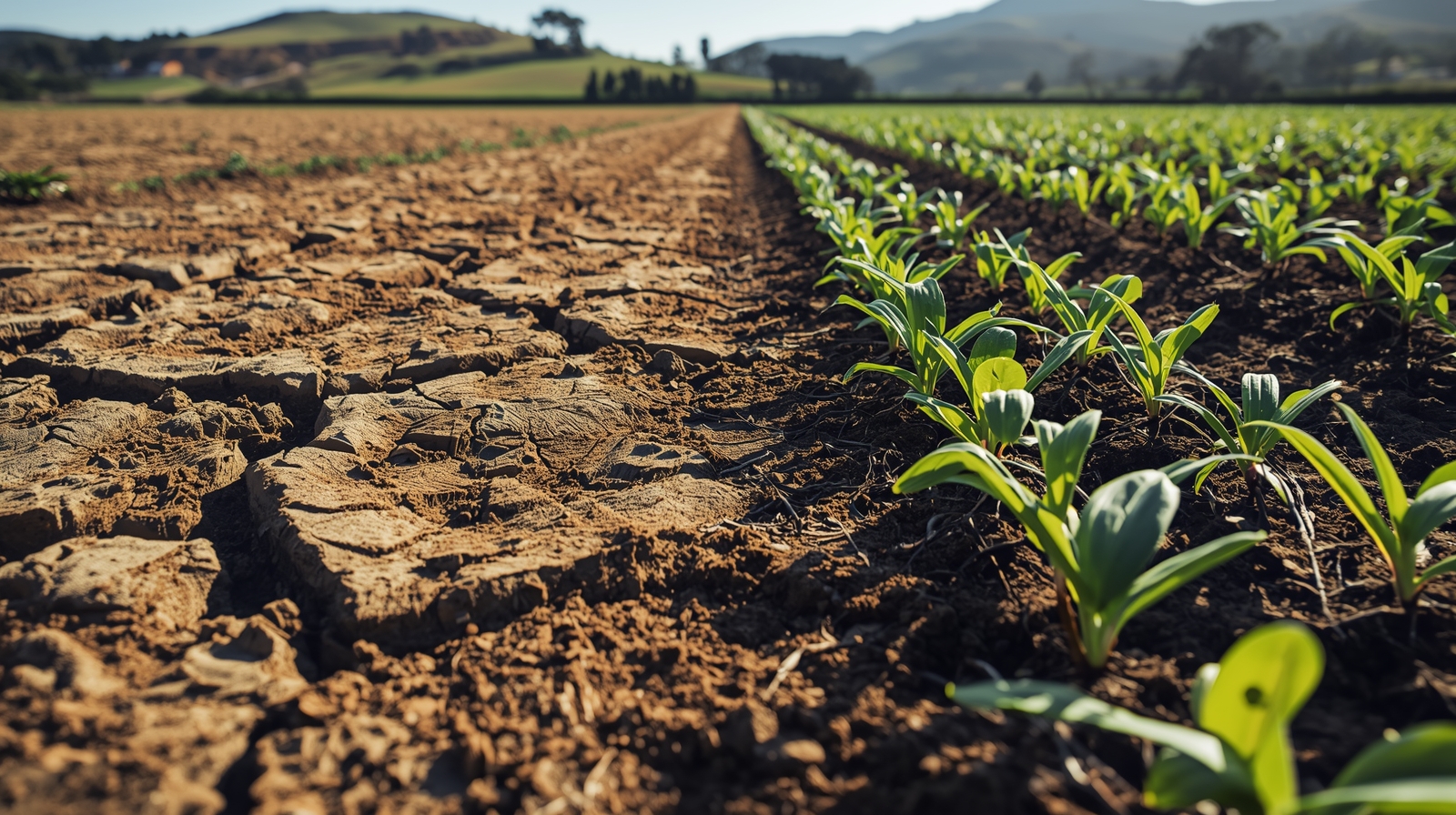
The Soil Is Tired — And Farmers Know It
“The soil doesn’t behave the way it used to.”
This is a comment heard more frequently among growers. Each season seems to require more inputs, more water, and more corrections just to maintain the same yields. Sometimes production still holds, but the effort and cost keep increasing.
This is not a coincidence. It is often a sign that the land has been pushed hard for many years.
Chile has built a strong reputation in global agriculture. Grapes, cherries, blueberries, avocados, and wine are exported around the world, making the country a major agricultural supplier. However, behind this success lies soil that has endured decades of intensive farming, synthetic inputs, and extended dry periods.
The key question for many farmers today is simple: how can production be maintained without exhausting the land?
This is where the advantages of organic fertilizers (ventajas de los abonos orgánicos) begin to make practical sense—not as a trend, but as a strategy for long-term soil productivity.
The Pressure on Chilean Agriculture
Chile’s geography creates very different farming conditions across the country.
Northern regions face extremely dry, almost desert-like climates. The central valleys experience long drought cycles, while southern regions receive heavy rainfall that can wash nutrients from the soil.
As a result, farmers must manage multiple challenges at the same time:
- Water shortages
- Rising input costs
- Strict export quality requirements
- Soil erosion
- Nutrient depletion
These pressures make it clear that quick chemical solutions do not always address the deeper issue: soil health.
Soil Health: The Hidden Foundation
Healthy soil is more than just dirt. It is a living system made up of structure, microorganisms, organic matter, and natural nutrient cycles.
Years of heavy use of synthetic fertilizers can gradually lead to:
- Reduced organic carbon levels
- Compacted soil structure
- Lower microbial activity
- Increased dependency on repeated fertilizer applications
In simple terms, when plants receive only instant nutrients, the soil slowly loses its natural ability to sustain crops.
Organic fertilizers work differently. Instead of only delivering nutrients, they help rebuild the soil system. By adding organic matter back into the soil, they improve structure, increase microbial activity, and create a more breathable soil environment.
Over time, healthier soil can support crops more efficiently and consistently.
Water Retention: A Critical Challenge
Water availability has become one of the most important concerns for Chilean farmers. Irrigation costs are rising as reservoir levels fluctuate and rainfall patterns become less predictable.
Organic fertilizers can help improve the soil’s ability to retain moisture. This can provide several practical benefits:
- Reduced irrigation frequency
- Stronger root development
- Better drought tolerance
- Less surface runoff
Fields with higher organic matter typically hold moisture longer than soils with low organic content. During long summer periods, that difference can have a significant impact on crop performance.
Export Markets Are Paying Attention
Chilean produce reaches markets across Europe, North America, and Asia. Today, international buyers are increasingly interested in how crops are grown.
Common questions include:
- How was the crop produced?
- What inputs were used?
- Are there chemical residues?
- Are sustainable practices being followed?
The use of organic fertilizers can support cleaner production systems and help reduce the synthetic load in agricultural soils. This can assist growers in meeting stricter residue standards and maintaining strong relationships with export markets.
In this context, sustainability is not just an environmental concern—it is also a business strategy.
The Cost Question
Farmers care about sustainability, but they also care about profitability.
Synthetic fertilizers often provide quick visual results, while organic inputs may take longer to show full benefits. This difference can make adoption feel uncertain at first.
However, many growers observe important improvements over time:
- Better soil structure
- Greater nutrient efficiency
- Lower frequency of inputs
- More stable yields
Instead of constantly feeding the crop alone, the focus shifts to feeding the soil, allowing the soil to support plant growth more naturally.
This approach may take time, but it often leads to a more resilient production system.
The Role of Modern Organic Fertilizers
Modern organic fertilizers have evolved beyond traditional compost-based products. Many now contain biologically active compounds that improve plant nutrition and soil health.
Humic and fulvic substances, for example, can:
- Improve nutrient absorption
- Stimulate deeper root growth
- Increase plant tolerance to stress
- Support beneficial microbial activity
These benefits are particularly valuable in Chile’s diverse climate zones. Vineyards in the central valleys must handle drought stress, while southern farms often need protection from nutrient leaching caused by heavy rainfall.
Organic inputs can help balance these conditions by strengthening soil biology and structure.
A Practical Transition for Growers
The shift toward organic soil management usually happens gradually. Many farmers begin by testing organic inputs on a small portion of land before expanding their use.
For example, a vineyard in central Chile dealing with soil compaction began incorporating organic amendments to improve structure. After several seasons, irrigation frequency decreased slightly and root development improved, leading to more stable grape growth.
These types of gradual improvements can make a meaningful difference over time.
Adopting organic fertilizers does not mean reducing productivity. Instead, it focuses on protecting the long-term performance of the land.
Looking Ahead
Chilean agriculture has always adapted to changing conditions. From expanding export markets to improving irrigation systems, farmers have consistently found ways to evolve.
Organic soil nutrition represents another step in that evolution. It responds to climate pressure, soil fatigue, and international market demands while maintaining productive farming systems.
Healthier soil supports stronger crops. Stronger crops lead to more stable yields—and stable yields protect the future of farming families across the country.
At Fitochem, we focus on developing research-based organic plant nutrition solutions designed for practical use in modern agriculture. We work with growers who want sustainable progress without unnecessary complexity.
Because in agriculture, long-term success always begins beneath the surface—in the soil itself.