




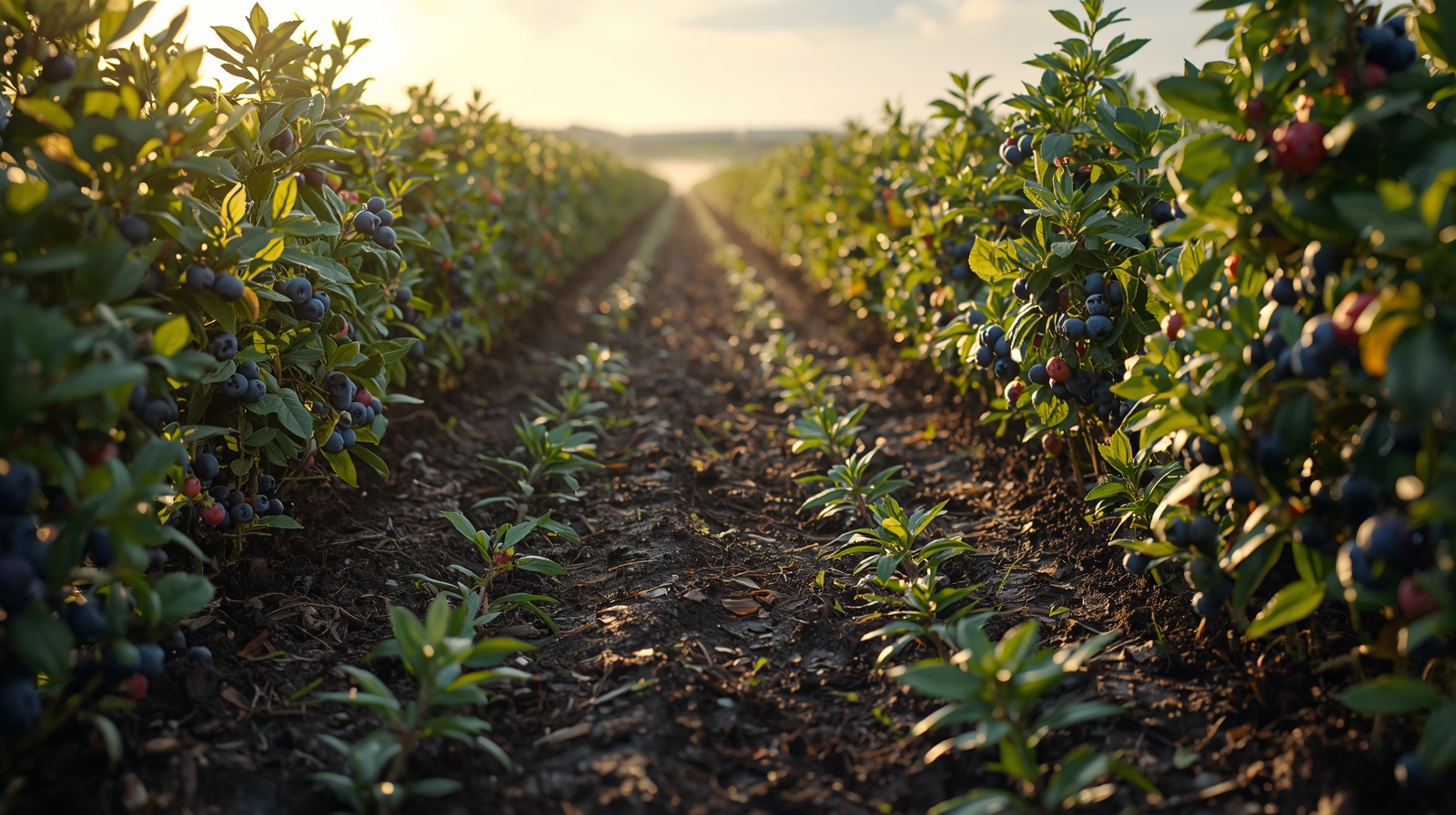
High-value crops demand high-level management. In the case of blueberries, market value reflects not only the fruit itself but also the significant effort and investment required to grow it successfully.
Blueberries are among the most profitable specialty crops, but they also require highly specialized cultivation practices. From the initial establishment of the orchard to ongoing soil management, water quality control, and climate monitoring, every stage of production demands careful attention. Even small mistakes in pH management or nutrient application can significantly impact yield and fruit quality.
As market demand continues to shift toward cleaner, sustainably produced food, many growers are transitioning to certified organic inputs to maintain both quality and compliance with evolving standards. In this context, OMRI-listed products are increasingly prioritized because they meet recognized organic production standards.
In blueberry production, one principle remains constant: healthy plants begin with healthy soil.
Understanding What Blueberries Need to Thrive
Blueberries are naturally adapted to environments with high moisture, acidic soils, good drainage, and full sun exposure. As members of the Ericaceae plant family, they possess a shallow root system that requires very specific soil conditions to function properly.
Maintaining the correct soil acidity is essential for successful blueberry cultivation:
- The optimal soil pH ranges from 4.5 to 5.5.
- Neutral or alkaline soils can cause nutrient lockout.
- Iron deficiency commonly results in leaf chlorosis (yellowing leaves).
Without the right soil environment, even well-managed fields may fail to produce optimal yields.
Shallow Root Systems Require Specialized Care
Blueberry plants depend heavily on soil conditions because their roots lack root hairs, which normally help plants absorb water and nutrients.
For this reason:
- The crop is highly sensitive to salt accumulation from synthetic fertilizers.
- Excess salts can damage roots and reduce nutrient uptake.
- Organic materials help improve soil moisture retention and microbial activity, enabling nutrients to be released gradually and naturally.
Ideally, blueberry soils should be acidic, well-drained, and rich in organic matter. Without proper soil preparation, even the best management practices may not deliver the desired results.
Why Organic Certification Matters in Blueberry Production
Blueberry production is increasingly influenced by strict regulatory standards and consumer expectations. Organic certification provides third-party verification that crops are produced without synthetic fertilizers or genetically modified organisms (GMOs).
Demand for organic blueberries continues to grow in both domestic and international markets. As a result, growers often turn to OMRI-listed inputs to ensure their production programs comply with organic certification requirements.
The Organic Materials Review Institute (OMRI) verifies that agricultural inputs meet organic production standards, giving growers confidence that the products they use support certification requirements while maintaining crop performance.
How OMRI Products Improve Soil Health for Blueberries
OMRI-listed products contribute to blueberry productivity primarily by improving soil health.
These inputs support key soil functions by:
- Maintaining soil pH within the optimal 4.5–5.5 range
- Increasing organic matter content
- Enhancing soil aeration and structure
- Supporting a beneficial soil microbiome
Because blueberries have fine, shallow root systems that are sensitive to nutrient fluctuations, OMRI-approved inputs help promote gradual and balanced nutrient release, reducing the risk of nutrient stress.
These benefits help:
- Stimulate microbial activity in the soil
- Improve nutrient availability under acidic conditions
- Build organic matter over time
Together, these effects create a stable soil environment that supports consistent plant development and healthy root growth.
Supporting Fruit Quality While Managing Environmental Stress
Consistent and balanced nutrient availability is critical during key developmental stages such as flowering and fruit set.
During these stages, blueberry plants require additional nutrients and careful management. However, excessive fertilization can negatively affect fruit quality.
Organic soil amendments help support:
- Improved fruit firmness
- Enhanced natural sweetness
- Reduced premature fruit drop
Blueberries are also highly sensitive to environmental stress, including drought, heat, and soil imbalances. Organic soil inputs improve soil structure and water-holding capacity, helping plants better tolerate variable weather conditions.
Practical Application Tips for Growers
Successful blueberry production requires careful management of soil acidity, drainage, and nutrient balance. Growers can improve results by following several key practices:
- Start with a comprehensive soil analysisto evaluate pH, organic matter levels, and nutrient availability.
- Support early root developmentto ensure efficient nutrient uptake during flowering and fruit development.
- Avoid over-fertilization, as excessive nutrients can damage sensitive root systems over time.
- Integrate soil and foliar nutrition programsto optimize nutrient delivery during critical growth stages.
- Monitor fields regularlyand adjust management practices based on plant performance and soil conditions.
The Bottom Line
Successful blueberry production begins with healthy soil. When soil is rich in organic matter and biologically active, plants develop stronger root systems and perform better under varying environmental conditions.
While short-term solutions may offer quick results, long-term soil health strategies ultimately improve both crop productivity and land sustainability.
Using certified organic inputs can be a key step toward achieving these goals.
At Fitochem, we offer OMRI-listed products designed to support soil health, strengthen root development, and help growers produce high-quality blueberries with consistent results.