




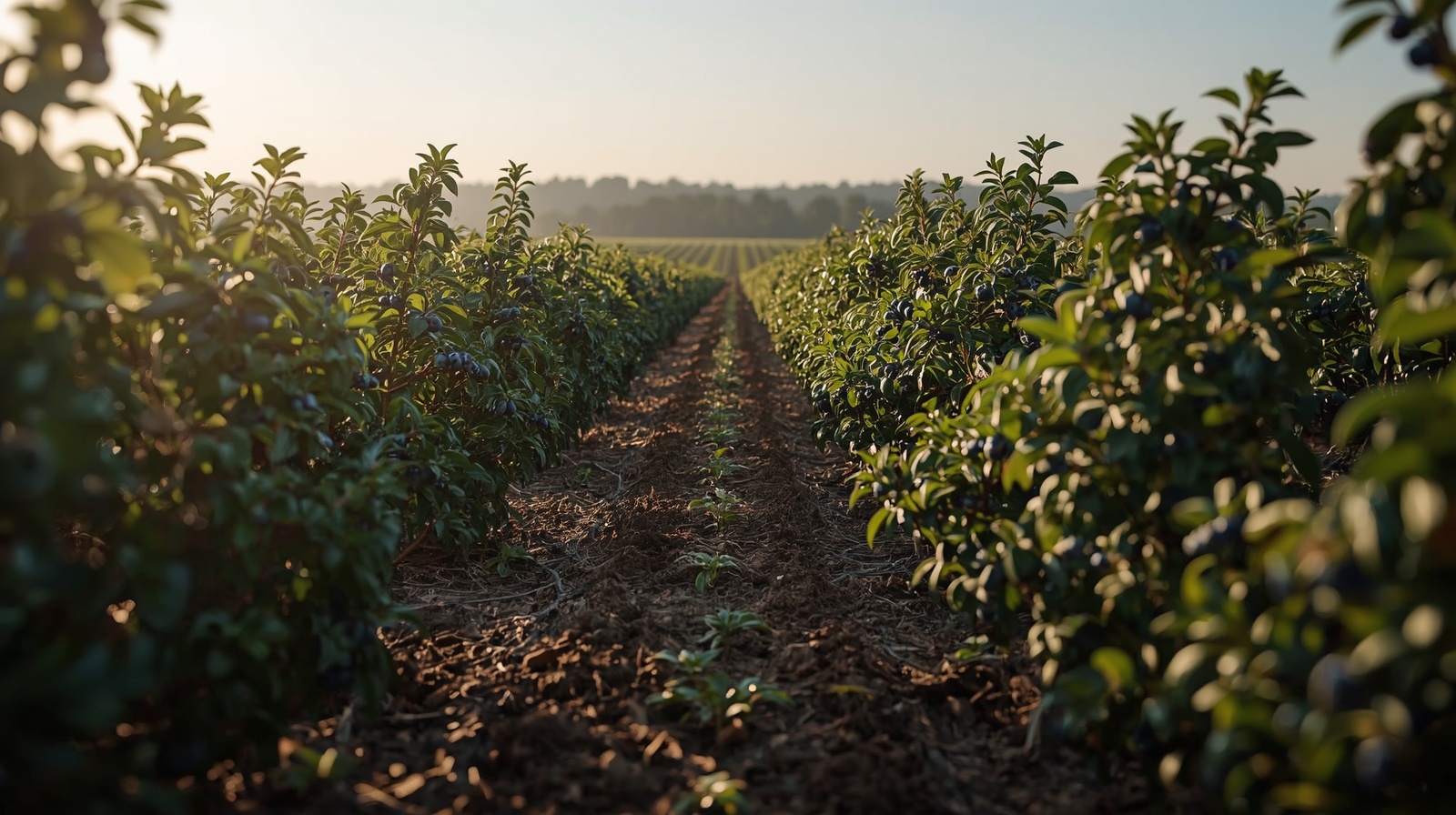
Blueberry farming is considered a premium agricultural enterprise, but it is also one of the most sensitive crops to manage. Blueberries respond quickly to even minor changes in soil pH, nutrient availability, and irrigation levels. As a result, growers often face challenges such as uneven plant growth, poor root development, and inconsistent berry size despite proper fertilization practices.
In many cases, the issue is not the lack of nutrients in the soil, but rather the plant’s inability to efficiently access and absorb those nutrients. Essential nutrients can remain locked in the soil, reducing their availability to plant roots.
This is where fulvic acid becomes highly valuable. Fulvic acid is a naturally occurring organic compound formed through the decomposition of plant and organic matter. Its primary role is to improve nutrient mobility and transport within the soil, helping plants access nutrients more efficiently.
For this reason, more growers are exploring the practical benefits of fulvic acid to improve blueberry plant health, increase nutrient use efficiency, and support more consistent crop production without relying solely on higher fertilizer inputs.
Key Benefits of Fulvic Acid in Blueberry Farming
1. Improves Nutrient Uptake Efficiency
One of the main benefits of fulvic acid in blueberry cultivation is its ability to improve nutrient absorption. In many blueberry fields, nutrients are already present in the soil, but poor soil conditions can cause them to become unavailable to plants.
Fulvic acid helps convert these nutrients into more plant-available forms, improving the uptake of key nutrients such as nitrogen, potassium, and calcium. It also enhances the absorption of important micronutrients. As a result, plants develop more uniformly while improving fertilizer efficiency and reducing nutrient waste.
2. Strengthens Root Development
Healthy roots are the foundation of successful blueberry production. Roots play a critical role in water and nutrient uptake throughout the growing season.
Fulvic acid supports active root growth and improves the movement of nutrients within the root zone. This allows plants to absorb moisture and nutrients more effectively, helping establish stronger plants and supporting long-term productivity.
3. Enhances Fruit Quality and Yield Consistency
A common challenge in blueberry production is achieving consistent berry size and fruit quality during harvest.
Fulvic acid helps maintain better internal nutrient balance within the plant, promoting more uniform fruit development. During flowering and fruiting stages, plants can more efficiently transport nutrients, resulting in improved berry size, texture, firmness, and sweetness.
This contributes to more reliable and consistent yields, which is essential for commercial blueberry operations.
4. Improves Soil Health and Microbial Activity
Soil health is one of the most important factors in successful blueberry farming. Fulvic acid helps create a healthier root environment by supporting beneficial soil microorganisms.
These microorganisms naturally break down organic matter and release nutrients into the soil system. Fulvic acid also improves soil structure and nutrient transport, helping maintain soil productivity over the long term.
Rather than focusing only on short-term plant growth, fulvic acid contributes to improved overall soil function and sustainability.
5. Increases Plant Stress Tolerance
Blueberry plants are highly sensitive to environmental stress, including heat, drought, transplant shock, and sudden nutrient imbalances.
Fulvic acid helps plants better tolerate these stress conditions by improving nutrient efficiency and supporting internal plant processes. During periods of stress, plants are often able to recover more quickly and maintain more consistent growth.
This added resilience is especially valuable during unpredictable weather conditions or challenging growing seasons.
Practical Application in Blueberry Farming
1. Best Application Methods
Drip Irrigation
- Applied directly into the root zone through irrigation systems
- Ensures even distribution throughout the plantation
- Highly suitable for commercial farming operations
Foliar Spray
- Applied to plant leaves at diluted rates
- Provides rapid plant response during periods of stress or high nutrient demand
- Especially beneficial during flowering and fruiting stages
Soil Drenching
- Applied directly around the base of the plant
- Stimulates root activity and nutrient movement within the soil
- Commonly used during early plant establishment
2. Ideal Timing for Application
- Early vegetative stage: Supports root development and strong plant establishment
- Pre-flowering stage: Promotes flower formation and fruit set
- Stress periods: Useful during heat, drought, or transplant shock to support plant recovery and stability
4. Integration with Farming Inputs
Micronutrient Programs
- Enhances the absorption of iron, zinc, and other micronutrients
Fertilizer Systems
- Improves the efficiency of both organic and conventional fertilizers
- Helps reduce nutrient losses in the soil
Sustainable Farming Practices
- Well-suited for environmentally responsible agricultural systems
- Supports long-term soil health improvement
Common Mistakes When Using Fulvic Acid
- Expecting immediate results after application
- Applying incorrect rates due to lack of formulation knowledge
- Failing to conduct soil testing before application
- Overusing fulvic acid without a balanced nutrient management plan
Different soil conditions respond differently to fulvic acid applications, making proper soil analysis and nutrient planning essential for optimal results.
Wrap Up
The primary benefit of fulvic acid in blueberry farming is its ability to improve nutrient use efficiency. Rather than simply increasing fertilizer application, fulvic acid helps plants make better use of the nutrients already available in the soil.
Over time, this supports stronger root systems, healthier soil biology, improved fruit quality, and more consistent yields.
Like most soil support solutions, fulvic acid delivers the best results when applied consistently, at the appropriate growth stages, and as part of a balanced nutrition program. When used correctly, it can become an important component of a sustainable blueberry production system focused on both productivity and long-term soil health.
At Fitochem, we believe sustainable farming begins with understanding the natural relationship between plants and soil. Through science-based agricultural solutions, we help growers produce healthier crops, improve soil performance, and build more efficient farming systems that support long-term agricultural success.