




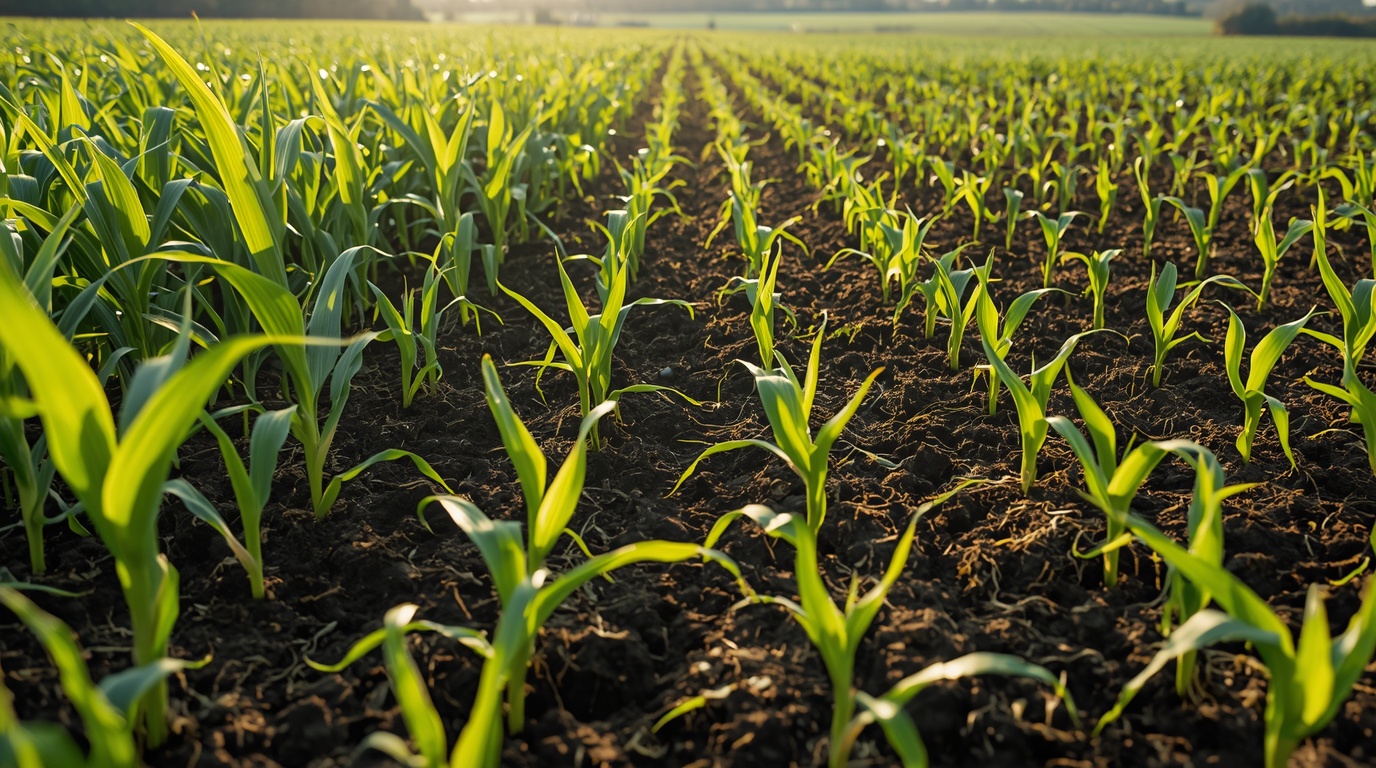
Every grower aims for healthier corn and stronger yields, yet results do not always meet expectations. Even with careful planning, quality seed, and proper fertilization, crops may still show uneven growth or weak performance later in the season.
When this happens, the issue is often not only above ground. In many cases, it begins in the soil.
Healthy soil supports stronger root systems, improves nutrient uptake, and promotes more consistent crop development throughout the growing season. For this reason, many growers are exploring the benefits of organic fertilizers as part of their fertility programs.
Organic fertilizers do more than supply nutrients. They also improve soil conditions that influence plant growth both during the current season and in the long term. Often, improving corn health does not require a complete overhaul, but rather a series of practical, well-informed adjustments.
Why Organic Fertilization Matters in Corn Production
Corn requires nutrients throughout nearly its entire growth cycle. From early development to harvest, plants continuously depend on nutrient availability to sustain growth and productivity.
One of the main advantages of organic fertilizers is that they contribute to both crop nutrition and soil health. Improved soil conditions can enhance water retention, stimulate biological activity, and increase nutrient availability.
As a result, many growers are shifting their focus from simply feeding crops to building healthier soils that sustain production season after season.
Start With Soil Testing Before Applying Organic Inputs
Before applying organic fertilizers, it is essential to understand existing soil conditions.
Fields that appear similar on the surface can differ significantly in nutrient content, pH, and organic matter levels. Without proper testing, fertilizer applications may be inefficient or fail to address underlying issues.
Soil testing provides valuable insights, including:
- Nutrient availability levels
- Soil pH limitations
- Organic matter content
Beginning with soil analysis allows for more precise and effective fertility decisions.
Build Organic Matter Before Planting
Successful corn production often begins below the surface. Increasing organic matter before planting helps create favorable growing conditions by improving soil structure, enhancing moisture retention, and supporting root development. It also promotes beneficial microbial activity.
Common practices to build organic matter include:
- Applying compost
- Returning crop residues after harvest
- Incorporating organic soil amendments
- Using properly managed manure
Although building organic matter takes time, gradual improvements lead to more productive and resilient soils over the long term.
Match Fertilizer Timing With Corn Growth Stages
Fertilizer timing plays a critical role in crop performance. Corn’s nutritional needs change throughout its growth cycle, making timely applications especially important when using organic fertilizers, which release nutrients more gradually.
Early Growth Stages
During early development, plants focus on root establishment and vegetative growth. Nutrient deficiencies at this stage can limit yield potential and are often difficult to correct later.
Later Growth Stages
As the crop transitions to reproductive development and grain formation, nutrient demands shift. Consistent nutrient availability during this phase supports optimal yield development.
Rather than applying all nutrients at once, aligning applications with crop growth stages often produces better results.
Use Organic Fertilizers That Support Nutrient Availability
Applying more nutrients does not always translate into better crop performance. Nutrients must be accessible to plant roots, which depends largely on soil health.
Microbial activity plays a key role in breaking down organic materials and gradually releasing nutrients. When soil biology is active and balanced, plants are better able to absorb what they need.
In many cases, stronger crops begin with healthier soil systems.
Protect Soil Moisture and Reduce Nutrient Losses
Even well-designed fertility programs can underperform if moisture is not properly managed. Dry conditions can limit nutrient movement and uptake, while excessive moisture can lead to nutrient leaching.
Practical strategies to address these challenges include:
- Leaving crop residues on the soil surface
- Using mulch when appropriate
- Minimizing unnecessary soil disturbance
- Keeping soil covered
These practices help conserve moisture, reduce erosion, and improve nutrient retention throughout the season.
Benefits of Organic Fertilizers for Corn Production
The growing interest in organic fertility programs reflects benefits that extend beyond basic crop nutrition. While supplying nutrients is essential, improved soil conditions can significantly influence crop performance both now and in future seasons.
Key benefits of organic fertilizers include:
- Improved soil structure that supports root development
- Enhanced moisture retention, particularly in dry conditions
- Increased microbial activity that supports nutrient cycling
- More consistent nutrient availability throughout the season
- Improved long-term soil health and productivity
These benefits often develop gradually, but over time they contribute to more resilient crops and more sustainable production systems.
Conclusion
Producing healthier corn is not always about increasing inputs. Often, it comes down to applying consistent, well-informed practices.
Soil testing, building organic matter, properly timing nutrient applications, and protecting soil health can make a measurable difference in crop performance. Together, these practices allow growers to fully realize the advantages of organic fertilization.
At Fitochem, we believe that better crops start from the ground up. With the right organic fertilizer practices, growers can build healthier soils, stronger plants, and more productive fields season after season.