




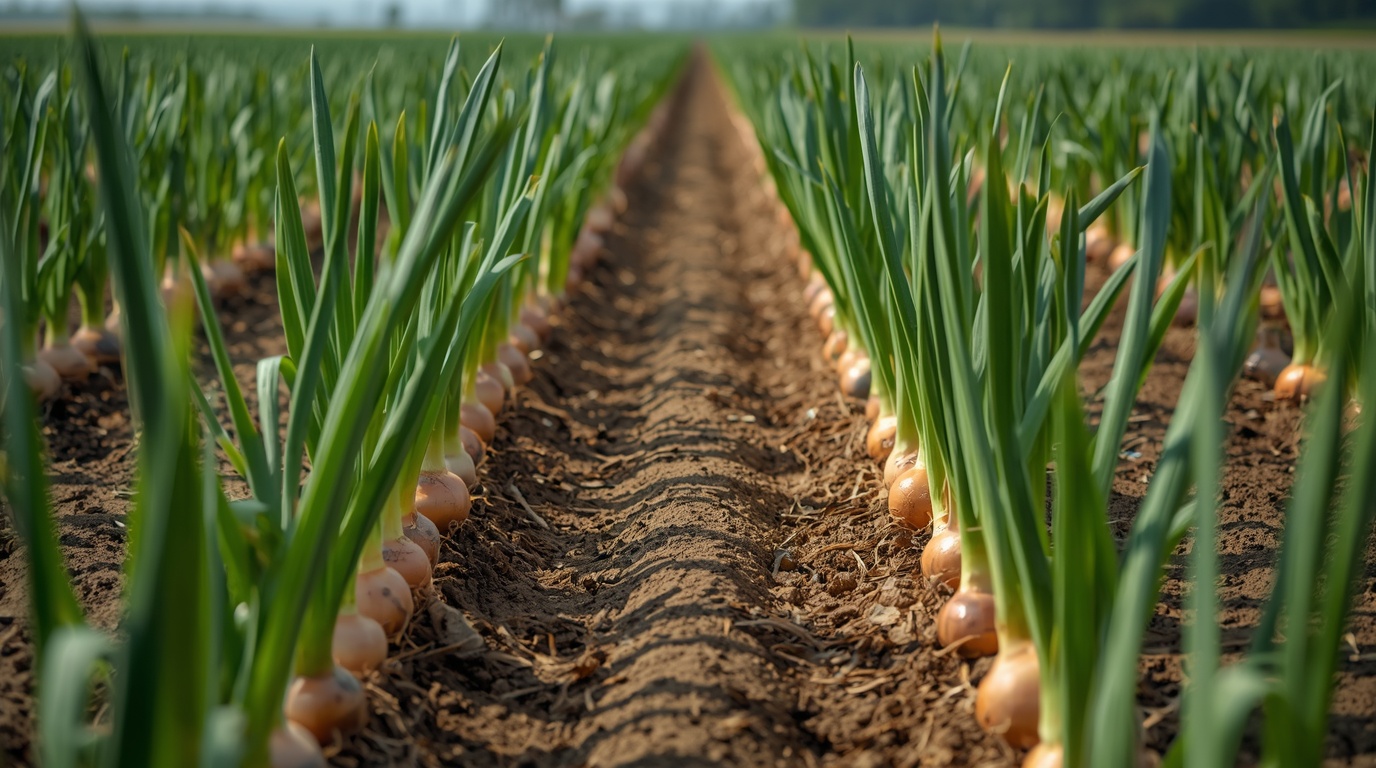
Growing onions successfully is rarely about getting just one thing right. Farmers may select high-quality seeds, irrigate at the proper time, and carefully manage their fields—but ultimately, it is healthy soil that connects all these efforts.
Because onions have shallow root systems, they rely heavily on nutrients available near the soil surface. Unlike deeper-rooted crops, they cannot access nutrients from lower soil layers when deficiencies occur. When the soil is fertile and well-balanced, onion plants establish more quickly, grow more vigorously, and develop healthier bulbs. However, when essential nutrients are lacking, the crop may never reach its full potential.
For this reason, plant nutrition in agriculture plays a critical role in onion production. Healthy soil supports plant development at every stage, helping growers achieve higher yields while maintaining long-term field productivity. Understanding the importance of soil nutrition in onion agriculture can make a meaningful difference in final harvest outcomes.
Promotes Strong Root Development
Healthy onion crops begin below the surface—with strong root systems.
Onion plants depend entirely on their roots to absorb water and nutrients, yet these roots remain close to the soil surface. If nutrients are not readily available in this zone, the plant cannot compensate by growing deeper.
Well-nourished soil creates favorable conditions for root growth, allowing young plants to establish quickly and efficiently. Once roots are properly developed, the plant is better equipped to sustain growth throughout the season.
Even under challenging conditions such as heat or limited rainfall, strong root systems enable onions to make more efficient use of available moisture. While this may seem like a small factor early on, it often has a significant impact by harvest time.
Supports Healthy Leaf Growth and Photosynthesis
Onion leaves are far more than just visible foliage—they are essential for energy production.
Through photosynthesis, leaves convert sunlight into the energy required for plant growth and bulb development. Each healthy leaf contributes directly to the plant’s ability to thrive.
Soil nutrition plays a vital role in maintaining leaf health. When nutrients are readily available, leaves remain green, active, and productive throughout the growing cycle. In contrast, nutrient deficiencies can lead to weak or underperforming foliage, limiting the plant’s ability to generate the energy needed for proper bulb formation.
Encourages Larger, Higher-Quality Onion Bulbs
The benefits of healthy soil become especially clear at harvest.
When onion plants receive balanced nutrition throughout their growth cycle, bulb development tends to be more uniform. Growers are more likely to harvest onions that are consistent in size, shape, and overall quality.
On the other hand, nutrient deficiencies often result in slower or uneven bulb growth. Even when irrigation and environmental conditions are favorable, inadequate soil nutrition can lead to smaller or irregularly developed onions.
While soil health alone does not determine the entire outcome, it provides a strong foundation for producing high-quality crops.
Improves Plant Resilience to Environmental Stress
Weather variability is an unavoidable part of agriculture. Periods of drought, high temperatures, or irregular rainfall can all affect crop performance.
Although farmers cannot control these conditions, they can influence how well their crops respond to them. Onion plants grown in nutrient-rich, well-balanced soil are generally more resilient. They use water more efficiently, maintain active root systems, and sustain growth more effectively under stress.
Healthy soil does not eliminate environmental challenges, but it significantly improves the plant’s ability to withstand them. This is another reason why plant nutrition in agriculture remains a cornerstone of successful onion production.
Increases Crop Yield and Overall Productivity
At harvest, every grower aims for consistent, high-quality production—and soil nutrition plays a central role in achieving that goal.
When onion plants receive adequate nutrients, they tend to grow more evenly across the field. Instead of variability between strong and weak plants, the crop develops with greater uniformity.
This consistency often translates into improved yields and more marketable produce. Well-formed, uniform bulbs not only enhance productivity but also increase the overall value of the harvest.
While no single factor guarantees success, healthy soil provides a critical advantage throughout the growing season.
Maintains Soil Health for Future Crops
The benefits of proper soil nutrition extend beyond a single growing cycle.
When soil is managed effectively, it remains biologically active and structurally stable. Beneficial microorganisms continue breaking down organic matter, improving nutrient availability for future crops. At the same time, well-balanced soil maintains better structure, allowing for improved water retention and aeration.
As a result, subsequent onion crops can establish more easily and grow under more favorable conditions. Rather than starting each season with depleted or compacted soil, growers benefit from a field that is prepared to support continued productivity.
Caring for soil is not only an investment in the current crop but also in the long-term sustainability of the farm.
Conclusion:
Healthy onion production begins with healthy soil. The quality of the soil directly influences plant strength, bulb development, and overall yield.
Prioritizing plant nutrition in agriculture not only supports the current season’s crop but also helps maintain soil productivity for future planting cycles. By investing in soil health, growers create the conditions necessary for consistent and sustainable success.
At Fitochem, we are committed to supporting growers with plant nutrition solutions designed to improve soil health, strengthen crops, and promote long-term agricultural productivity.